Matching Range Length to How Fast the Instrument Moves

A period length that works well on one instrument can be close to useless on another, and the reason is not mysterious. Instruments move at different speeds. A window of fixed clock time captures a different proportion of the day's activity depending on how much activity there is to capture, so the same setting produces a tight, informative range in one place and an exhausted, oversized one somewhere else.
Pace Is the Thing Being Measured
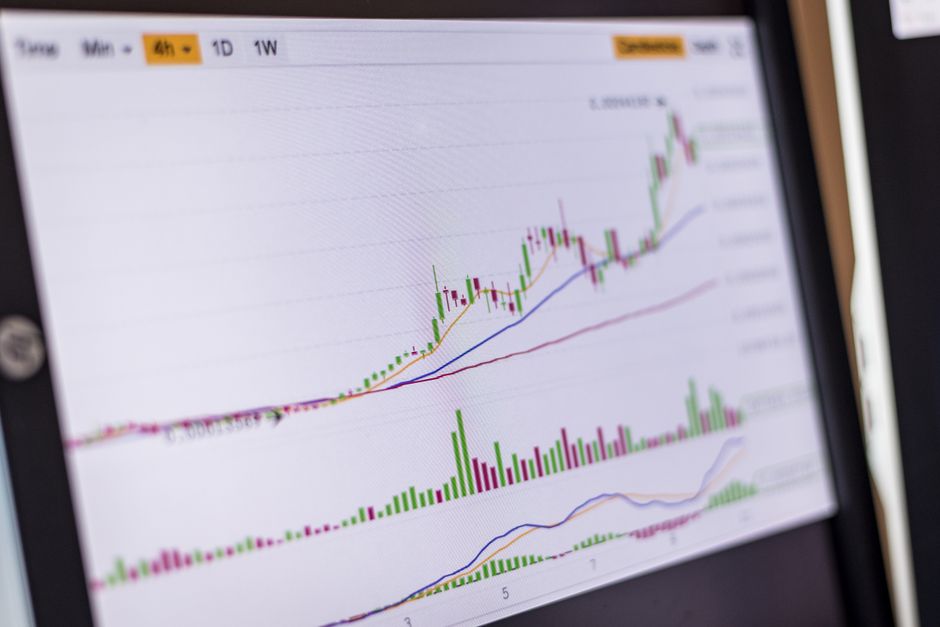
Think of the opening period as a sampling window rather than a duration. What you want from it is a level built from enough participation to mean something, without having consumed so much of the day's expected travel that there is nothing left to trade toward.
Two instruments can both produce a satisfying looking range in thirty minutes while being in completely different situations. On the faster one, that range may already span most of what the session will offer. On the slower one, it may represent a small early sample of a move that develops for hours. The chart looks similar in both cases. The trade behind it does not.
Judging Pace Without a Formula

The comparison worth making is between the height of the opening range and the instrument's typical full session travel. You do not need a precise figure. Watching a few weeks of sessions and forming a rough sense of whether the opening period usually accounts for a small slice, a meaningful chunk, or the bulk of the day is enough to guide the setting.
If the opening period routinely swallows most of the day's movement, the window is too long for that instrument and shortening it puts the level back into useful territory. If the range is consistently so shallow that it is broken and rebroken on ordinary drift, the window is too short and the level it produces is not a level at all.
Liquidity and Structure Matter as Much as Speed
Pace is the headline variable but it is not the only one. An instrument with thin participation in the first minutes produces early prints that reflect a handful of orders rather than genuine agreement, and a very short window on that instrument is measuring almost nothing. Extending the period is less about confirmation there and more about waiting for enough participants to arrive that the high and the low mean something.
Session structure is a second consideration. Some instruments have a related market that opens later, and activity arrives in a step rather than smoothly. A period that ends just before that step measures a quiet stretch and then hands you a level immediately before conditions change. A period that spans the step measures both regimes at once. Neither is ideal, and knowing which one your setting produces is more useful than knowing which is theoretically preferable.
Pace Is Not Fixed
The most common mistake after calibrating is treating the answer as permanent. Instruments speed up and slow down across weeks and months. A setting chosen during an active stretch will produce ranges that are too shallow to be meaningful once conditions quieten, and a setting chosen in a quiet stretch will produce ranges that eat the whole day when activity returns.
This does not mean adjusting constantly, which is its own failure. It means revisiting the question on a slow schedule, perhaps when a season of results is being reviewed anyway, and asking whether the opening period is still taking a sensible bite out of the day. A drifting relationship between range height and daily travel is the signal to look, and it is visible without any calculation once you are in the habit of noticing it.
Fitting the Length to the Instrument You Actually Trade
Trading several instruments with one period length is convenient and it is also a decision. It says that the convenience of a single routine outweighs the mismatch on whichever instruments the setting fits worst. That can be a reasonable trade, particularly for someone watching several markets at once, but it should be an acknowledged one rather than an accident.
The alternative is a small table of lengths, one per instrument, arrived at slowly and left alone between reviews. It is less tidy and it removes the temptation to explain away a poor stretch on one market with a setting that was only ever suited to another.